

With Spider-Man: Brand New Day just around the corner and Avengers: Doomsday less than six months out from cinemas, chatter about the Marvel Cinematic Universe (MCU) has been picking up lately. Unfortunately a good chunk of that chatter has been unjustifiably critical of multiversal storytelling.
First off, I want to be clear that I’ll be defending multiversal storytelling, not the Multiverse Saga itself. Marvel Studios absolutely dropped the ball on that one. Also, it’s perfectly fine to not like superhero movies, or to have enjoyed the MCU back when it was new and fresh but to have lost interest in it now that Avengers: Endgame has come and gone. People regularly get caught up in something only to lose interest when it’s no longer a novel experience. That’s just human nature and I’m not going to bag on people for being human.
What I’m coming for today is the idea that multiversal storytelling is somehow inherently uncreative or “lazy”. Am I a comic-loving nerd defending his beloved hobby? Yes. Does that change the reality that such criticisms are mostly unfounded? No.
Characters and Plot Points
First off, let’s challenge the idea that multiversal characters are less creative than their original counterparts because all a writer has to do is make a minor change to the character’s history or origin story rather than put in the effort to create an entirely new one. To be fair, that’s not exactly untrue, but it’s not exactly a problem, and certainly not unique to a multiverse.
This is because pretty much every character these days is already just a twist on an already existing one. If we take a step back, there’s not much difference between a supposedly lazy writer creating a multiversal variant of a character and a writer adapting one from an IP to the screen. Like, do we really think Jon Favreau created Iron Man, Rhodey, and Pepper Potts? Or did he just take the existing characters and put his own twist on them? The almost universally praised “faithful adaptation” of a character, which is about as uncreative a version of them as they come, similarly problematic compared to the equally almost universally condemned “bastardization” of a character, which is almost always actually creatively different from their source material.
The issue becomes even more pronounced when we leave the multiverse and look at pretty much any movie based on a novel, all of which are basically just multiversal variants of their source material. After all, it’s not like Spielberg created the characters of John Hammond, Dr. Grant, and Ian Malcolm for Jurassic Park; those characters came from Michael Crichton’s novel of the same name, and the talented director “just” adapted them for his own purposes. He jettisoned some parts of the plot, changed others, and faithfully recreated still others. Yet almost no one accused Spielberg, or at least the original Jurassic Park, as being uncreative. Admittedly that’s a dated reference, but the same is true for more recent movies like The Martian or Project Hail Mary; both are excellent films, but both are based on novels and neither of them should be condemned as uncreative just because the screenwriters didn’t come up with all new characters facing all new challenges with completely different plots virtually unconnected to their source material.
And yes, I can hear the haters now going on about how these issues may not be inherent to multiverses, but that multiverses encourage lazy writing by making access to cheap, uninventive storytelling answers easier. However, to invoke a British phrase that’s likely used in every universe, that’s just plain bullocks.
Cheap Thrills and Easy Answers
The second criticism often levelled at multiverses is that they make it too easy to reintroduce old characters or undo previous plot points to sate disgruntled fans. The most common example I’ve come across is that if a franchise kills off a favorite character, it’s somehow the most uncreative thing ever for a mid- or post-credit scene to show a portal to an alternate universe and revealing a variant. Honestly, I can’t think of an extant example of this actually happening, but even if the argument is mostly just a thought experiment, it does make sense. Until you dig a little deeper.
One need only look at the critically (and frankly deservedly) reviled ninth installment of the Star Wars franchise, The Rise of Skywalker, to recognize that the problem isn’t that multiversal storytelling makes it easy to come up with cheap, uncreative excuses to reintroduce old villains. “Somehow Palpatine returned” is arguably the best example of creatively bankrupt storytelling being used to prop up a soulless film, but there was no hint of him being from an alternate dimension. Does ‘multiversal variant’ have a place on the wheel of uncreative excuses to bring back old characters? Sure. But it’s just one wedge on that wheel, right alongside ‘cloning’, ‘doppelgangers/shapeshifters’, and the laziest most sweepingly uncreative tool of all, good ol’ ‘magic’.
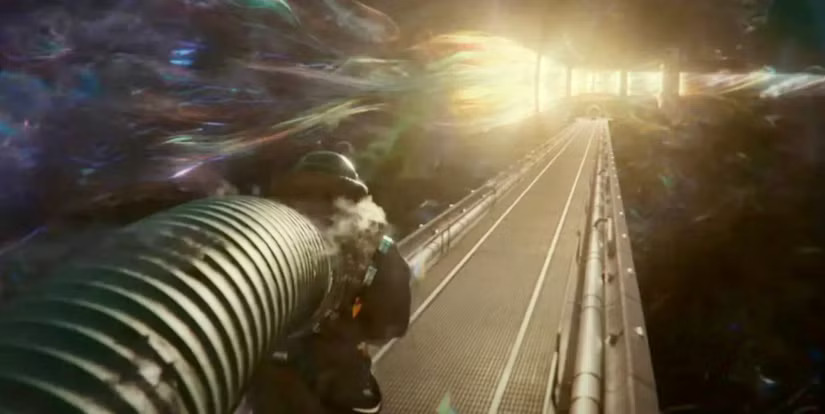
Now, to be clear, I’m not trying to defend bad cinema or studio executives leaning on returning characters to cash in on nostalgia. The third Ant-Man movie is full of plot holes and ridiculous contrivances like its army of hyper-intelligent ants that conveniently evolved offscreen thanks to technobabble and miraculously arrived just in time to save the day. Then of course there’s Ant-Man’s offensively powerful plot armor that saved him from Kang’s deadly disruption beams by virtue of the villain just… forgetting he had them, I guess? Make no mistake, Quantumania is a bad, bad, bad, truly terrible movie that failed miserably as an introduction to the Multiverse saga. But it being a multiversal story itself had nothing to do with the many problems it suffered from.
So, if you enjoyed the MCU but eventually burned out on it—as happens and is perfectly natural—good for you. Please don’t waste precious hours of a finite life following media you find unfulfilling, and I fully encourage you to go find the next new thing to spark your passion and interest. But for the love of god… for the love of all the gods and all their variants… please stop accusing the multiverse of being the source of boring nonsense. There is something frankly obnoxious about making up excuses to (try to) justify condescension towards the variety of storytelling opportunities that an array of infinite possibilities actually provides. Calling multiverses lazy and uncreative is, ironically, about as lazy and uncreative a criticism as one can make in this or any other universe.

