

I’m tempted to say more than I should about the fan backlash to the most recent entry in the Star Trek franchise, Starfleet Academy (SFA). Star Trek has always had a peculiarly toxic sect of its fanbase – though it’s never been as obnoxiously loud and widespread as it seems to be these days – but rather than heap more anger and hate into an already overly hateful world, let’s instead take a break from fighting the good fight and instead focus on what’s so great about this latest incarnation of Trek and what sets it apart from the rest of the mostly mediocre entries in this modern era.
It’s What Discovery Should Have Been
This is strictly personal preference I suppose, but I’m sure I wasn’t the only Trekkie to raise an eyebrow when it was first announced that Star Trek: Discovery (DISCO) would be set in roughly the same era as the original series (TOS). Considering that by the time DISCO premiered, roughly two decades of visual effects improvements had passed, including society’s collective transition from SD to HD and eventually 4K resolution screens, it was a baffling decision. How DISCO’s producers convinced themselves it wouldn’t be visually incongruous to revisit that era is only a slightly less baffling mystery than why they didn’t just produce a third phase of Star Trek set a few decades after Star Trek: The Next Generation (TNG). You know, like fans wanted.
Eventually DISCO’s writers contrived a reason to fling the titular starship into the 31st century, roughly 800 years after the conclusion of Star Trek: Voyager (VOY). Sure, the idea of The Burn and a fractured future for the Federation was also jarring, but because this post-calamity setting is where SFA has situated itself, the series now at least has a good reason to look as sleek and flashy as it does compared to other recent entries.
It’s What Enterprise Should Have Been
I admit I wasn’t the biggest fan of Star Trek: Enterprise (ENT) when it originally aired, and though it’s grown on me over the years, there’s no denying it dropped the ball on several occasions, not the least of which was the exceedingly rushed founding of the Federation that capped the series off.
Now, while the Academy/USS Athena do manage to find themselves on the far side or even wrong side of Federation territory on occasion, we spend most of our time with the mobile campus on Earth; not exactly a setting for exploring strange new worlds.
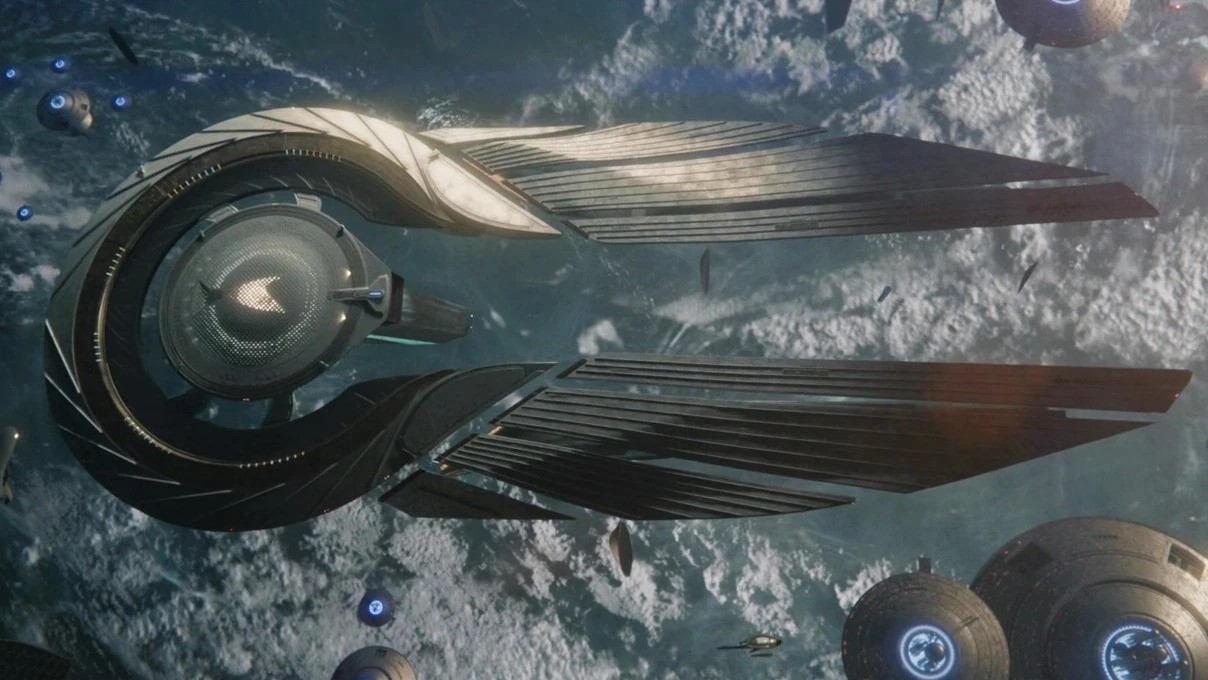
However, SFA uses the devastation of The Burn and the intervening years as the backdrop for a series that is at its core all about building—or in this case, rebuilding—the utopian future that Trek is known for. This is a Federation that is no longer the primary power in the quadrant. Its representatives must work to entice new civilizations to ally with them, rather than just “welcoming” new member worlds that are seemingly always eager to join. Federation leadership must make concessions to lost allies to demonstrate a renewed commitment to their ideals, or to bring Betazed back into the Federation fold, or to repair relations with the Klingons. It all works together to create the feeling of a fledgling society trying to grow into its best version of itself. Despite repeated appearances from Tellarites and Andorians and the like, ENT never achieved the same sense of purposeful growth. Starfleet Academy delivers on that lost promise pretty much right out of the shipyard.
It’s What Star Trek Should Be
Star Trek has always been optimistic, insightful, and not afraid to deliver on the drama of a good debate instead of a protracted space fight.
However, beyond just being a hopeful sci-fi franchise, Star Trek has also always acted as a reflection of modern times, which is again something that earlier series in the current modern era seemed to have eschewed. DISCO and Star Trek: Strange New Worlds (SNW) are both set in the same era as Star Trek: The Original Series (TOS), whereas Star Trek: Lower Decks (LD) owes much of its history and setting to TNG. Starfleet Academy on the other hand is the first series to carve out its own identity in the new era.
And while this is not the best reason to enjoy the show, one of the most important contributions SFA makes to the Trek franchise is to recontextualize The Burn, making it into an actually useful part of the show’s backdrop rather than a bad attempt at being edgy. It’s become an important part of a future history that portrays a once proud and powerful civilization brought low by environmental catastrophe and which gave in to its worst impulses as a result, now trying to rebuild in the aftermath and repair relations between governments that had been damaged by those same impulses. If that’s not a reflection of current events, modern social issues, and classic Star Trek values, I don’t know what is.
It’s What People Should Be
On second thought, I am going to weigh in on the toxic fan backlash to the supposedly “woke” casting. I’m not going to pretend I know the ins-and-outs of CBS’s corporate structure, but I do know the Trump administration has been working overtime to scrub DEI initiatives from the government and hold “woke” universities’ funding hostage. I also know that somewhere in CBS’s executive board rooms are people willing to capitulate to such demands, as demonstrated by their canceling of The Late Show.
Yet in these actively racist and homophobic political and corporate environments, Starfleet Academy has taken supposedly “woke” casting to a new level with multiple homo- and pansexual characters, people of color, and non-conventional Hollywood body types. But frankly, that’s a strength, not a weakness. In today’s divided world Starfleet Academy should be praised for the bravery of its casting, not condemned. And maybe, just maybe, if a few more so-called Trekkies would stand up to the real world’s injustices instead of whining about whitey being the incompetent comic relief on a TV show, the idea of a utopian future might seem a little more like an achievable goal instead of a rapidly fading dream.
Stream the entire first season off Star Trek: Starfleet Academy on Paramount+.
 dpcfreelance.com