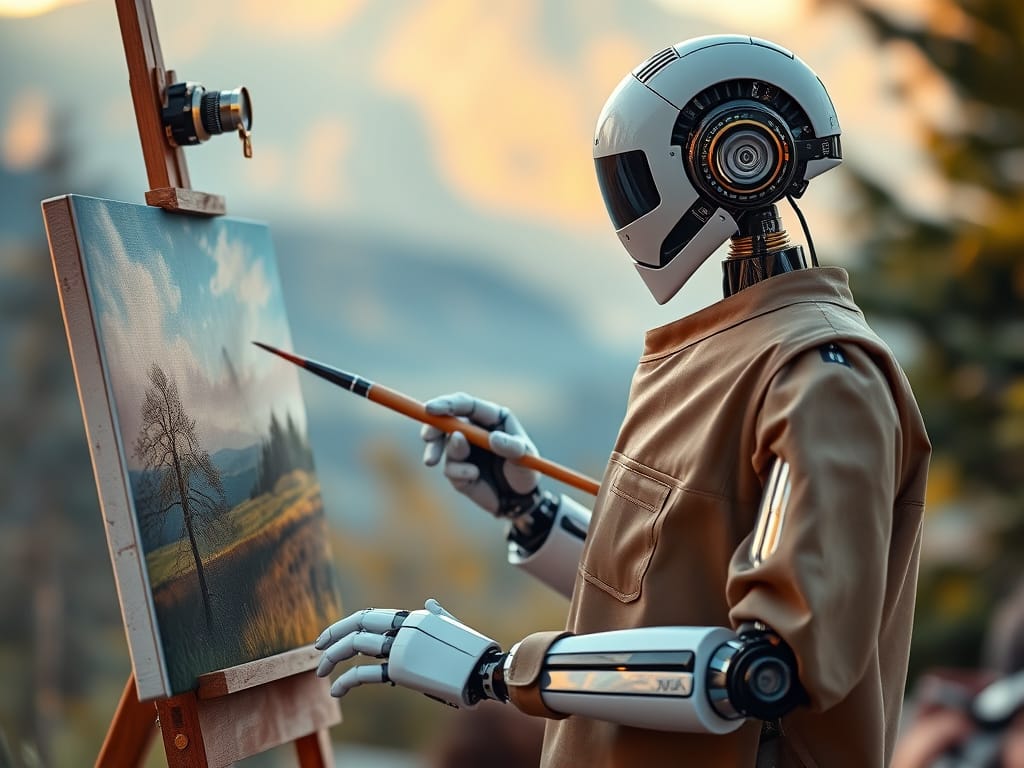
My latest project, the Legends of Athea Players’ Guide to my homebrew fantasy roleplaying setting, makes extensive use of AI generated artwork, and I have to say, the experience was enlightening. From how easy it was to create art that captures a mood to how frustratingly difficult it was to make even the simplest refinements, my first foray into using this sometimes controversial new technology left me with mixed, almost blended, feelings.
Finding the Right Algorithm
Run a quick search for “AI art services” and you’re going to find an abundance of available services, though from my (admittedly limited) research, Open Art AI and Magic Studio will probably be your top hits, both sponsored and organic. I immediately signed up for a trial of one, then the other, and the results were mildly encouraging. However, it wasn’t until I finally clicked on an unremarkable looking link to a site called NightCafe that I was impressed enough to keep using the service.
Now, I’m not a big fan of coffee in general (let alone at night) but insofar as AI art services go, the hunt was over. Unlike the other AI art sites I’ve checked, NightCafe uses a credit-based system, and free accounts are regularly topped up. It’s also very community focused, letting users earn additional credits by interacting with others throughout the platform, usually by sharing their creations, voting on others’ creations, entering daily contests, and so on. Sure, there are plenty of upgrades that can only be accessed through a paid account or by spending additional credits, like editing, upscaling, and even animating creations, but unlike other services I’d encountered up until then, I wasn’t limited to the initial trial and then stymied by a paywall. And of course, referring users to their service can net you a reasonably hefty haul of free credits.
To be extra clear, this isn’t a sponsored message, nor the point of this post. I just have a soft spot for community-oriented services that provide real value, even for trial users, so figured I’d give them a shoutout. I invite you to use this link if you’d like to try it out for yourself, but enough with the effusive praise; let’s move on.
Lessons Learned
As I should have known, the reality of using an AI art generator was far different than my expectations. Take what I say with a grain of salt as my experience remains exceedingly limited and I’m not going to pretend I’m an expert, but while just using the service can be as simple as typing in a prompt, there’s a huge array of options available as well. I’m beginning to understand why so many AI training gigs pop up on job boards like LinkedIn or indeed, and why experience with AI is an increasingly common asset. It’s sometimes easy to dismiss using AI as a crutch (something I, as a writer, am guilty of when it comes to people using ChatGPT to write essays and the like), but sometimes getting the prompts and settings just right feels like an enormous task.
Some of those options are straightforward, like being able to set an appropriate aspect ratio. Others, not so much. For example, I was often frustrated trying to get the AI to add, remove, or modify specific elements. I later discovered that much of what I was trying to do was dependent on the AI “model” used, which is different from the models that you can create for these AIs to use. You see what I mean about blended feelings? Using AI is so simple and straightforward, yet sometimes so confusingly complicated.
As Usual, The Devil is in the Details
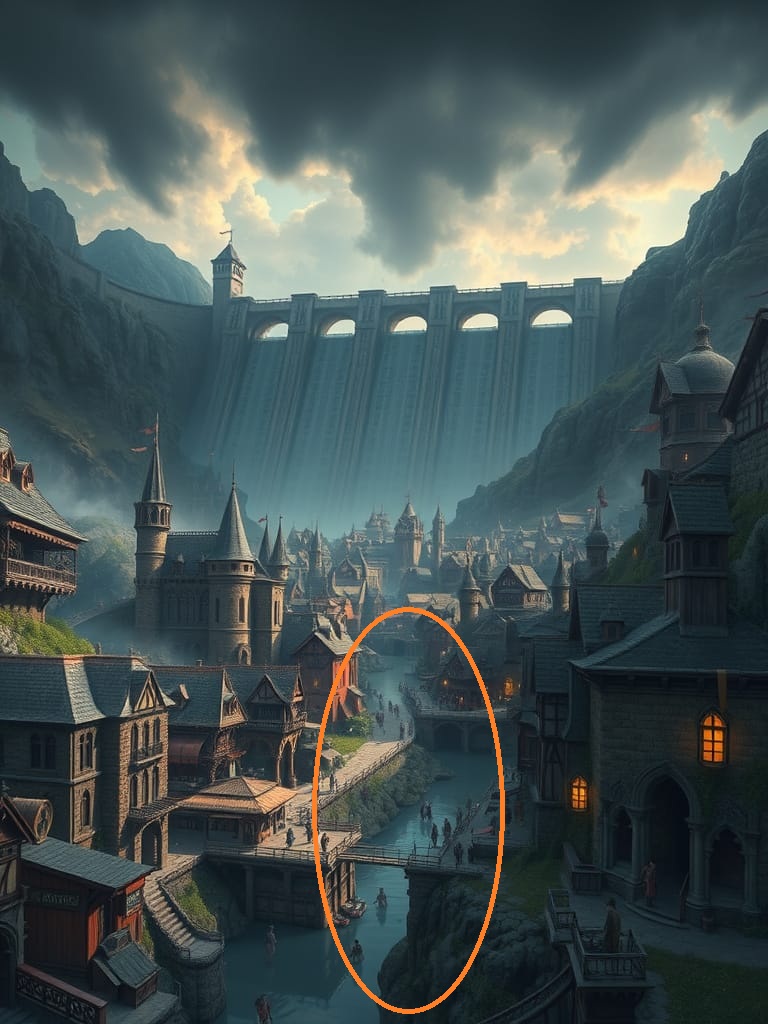
In my experience so far, AI-generated artwork was great for getting the general feel of the campaign across, but because of some of the difficulties in working with it (and the fact that this was a personal project) I settled on some imagery that was less than perfect. The best example is the following image of a city built in the shadow of an immense dam. You can read the specifics about why such a thing would be done in the guide itself (which you can view in my portfolio), but while the image manages to convey the scope I was aiming for, I’m uncertain why the algorithm painted the streets as flooded given the dam is intact (as it should be).
Furthermore, one of the central settings of the campaign is an enormous ivory tower, which at first glance is as imposing as I’d hoped, though the clouds, shadow, and lighting are subtly but impossibly blended on closer inspection. Is that a mountain in the background? Or a shadow? Or a cloud? I’m not sure, and again, for a personal D&D campaign guide I’m not overly worried, but it serves as another good example of how AI isn’t quite “there” yet.

An Unexpected Use Case
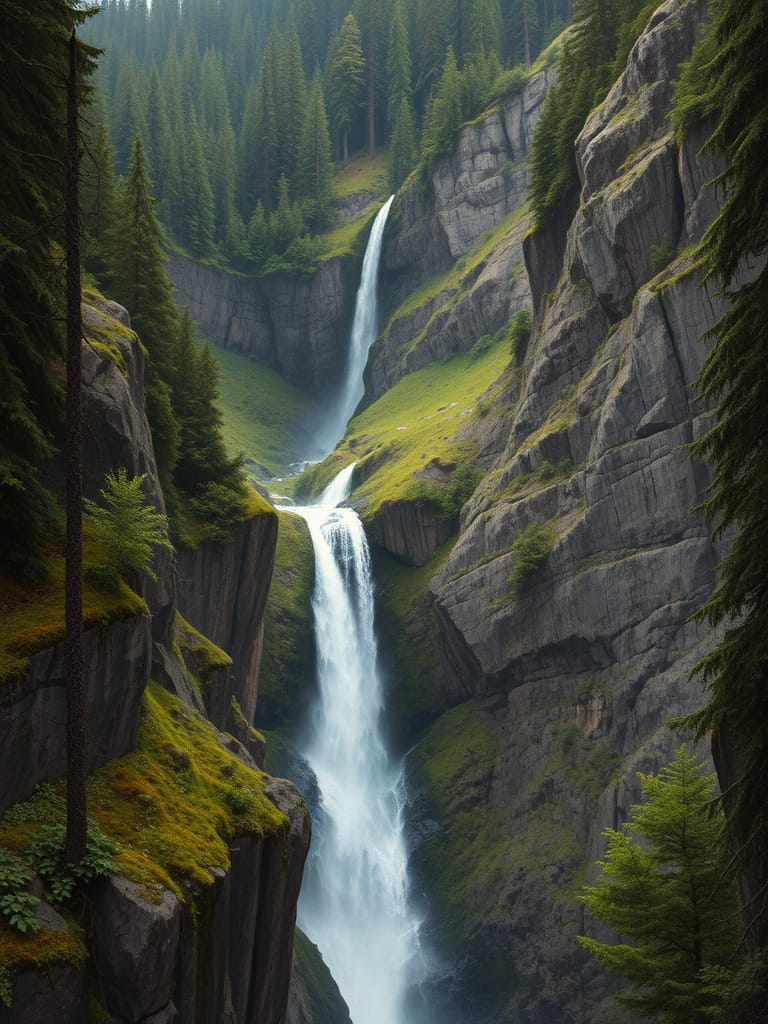
In retrospect, I don’t know why I was so surprised by the fact that AI generated art seems exceptionally well-suited to green screen images. It’s not like the need for background artwork to replace the green background is a new requisite. Yet it wasn’t until I was actually engaged in the process that I realized how easy it was to create the appropriate background. Despite any difficulties dealing with the details, the speed and simplicity of building reasonable quality backgrounds is both eye-opening and exciting!


Final Thoughts
As a writer I’m not going to pretend I’m a big fan of generative AI, and my reasoning is likely as obvious as it is obviously biased; I’m not keen on it replacing human artists and writers (like me). That said, as a creative I can’t argue AI’s potential to dramatically reduce costs and streamline production. I’m not sure if handing over the creation of baseline elements to generative algorithms while leaving refinements up to real world writers and artists is the best way forward for creative industries as a whole, but it certainly appears to be the way things are going, at least as of now. Plus, as a creative spirit full of big ideas but with neither the time nor money to engage flesh-and-blood digital artists, art via algorithms has been a boon. I’m not a big fan of bandwagoning, especially when it comes to Silicon Valley, but as someone who prides themselves on being able to actually admit when they’re (actually) wrong, I think it’s time for me to get onboard.
 dpcfreelance.com